
Hypertension
This blog post provides an article focused specifically on Hypertension or High Blood Pressure. You will not believe that the reason we decided to write this knowledge-based article on Hypertension: high blood pressure is the biggest killer in the entire world, and the most silent killer of all. So do take special care reading this article and try with all your might to prevent it or to recognise the signs and symptoms early. Also take care in learning what the causes are and try to avoid them with all your might.
What is Hypertension
Hypertension, or high blood pressure (BP) is one of the most common ailments, globally. (BP) is a major risk factor for stroke and myocardial infection (heart attacks).
The best way to describe Hypertension is as follows:
Think of the blood vessels as a pipe that transports water, or liquids. The pressure inside the pipe is dependent on the size of the hole, the amount of liquid inside the pipe and how fast the liquid is travelling inside the pipe. If the pressure keeps increasing, it will eventually damage the pipe and ultimately burst the pipe. This is what happens to blood vessels inside all the organs of the body. If the blood vessels delivering nutrients or transporting waist products away from organs are damaged, the organs will stop working.

Signs and Symptoms
Blood Pressure (BP) has no clear signs or symptoms, therefore often dubbed the silent killer. Hypertension is more common with increasing age; however, high BP is being diagnosed more and more often in the ages between 25-30 years old where it more likely to gets overlooked. Most countries have clear policies and recommendations around the diagnosis and management of high BP. Click here to download the South African policy on Hypertension (this will be another site, hyperlinked).
How is Hypertension Diagnosed
High BP is diagnosed by two distinct numbers, systolic on top, and diastolic on the bottom (systolic/diastolic), with normal being BP=120/80mmHg, however, BP should be assessed over a period of time and not be relied on a single number or encounter. Blood pressure is measured in millimeters of mercury (mmHg), which is the standard measurement. The ‘observation period’ for diagnosing Hypertension, depends on the results of the BP and the presence of other risk factors or end organ damage. Previously Hypertension was diagnosed only with the upper value being greater than 130mmHg, now hypertension in diagnosed by either the upper value or the lower value being 90mmHg and above
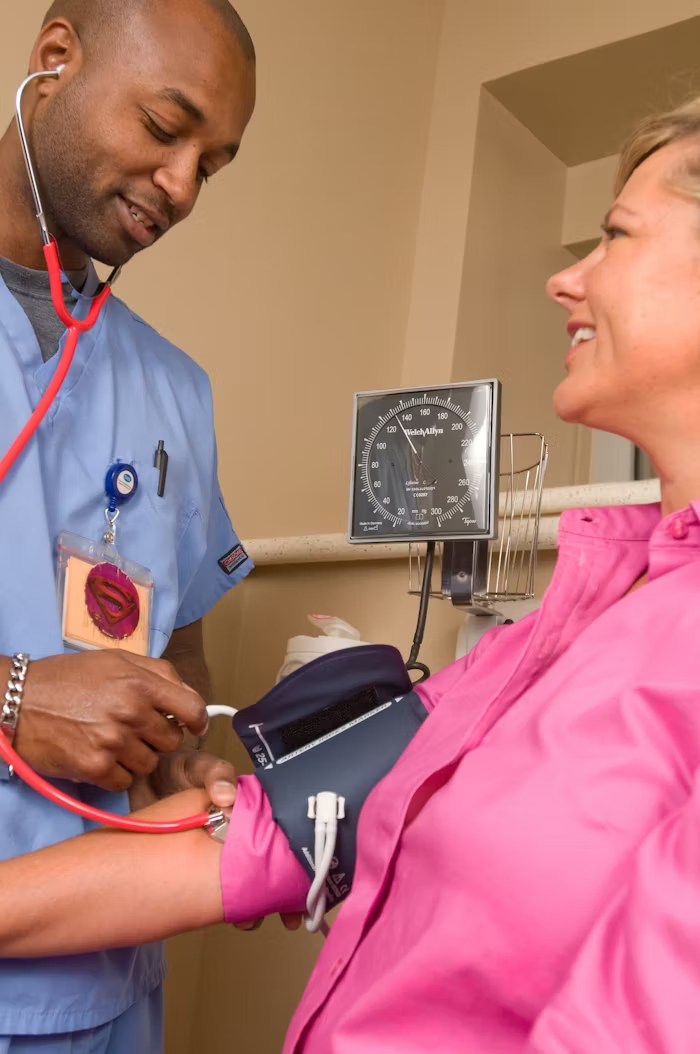
When you visit a healthcare provider to have your BP checked, you should be seated and remove any tight clothing from your upper arm The cuff that is used should fit suitably around your arm.
1. You should receive urgent attention should your BP be ≥ 180/110 and/or any of the following:
· Visual disturbance
· Dizziness
· Severe Headache
· Chest pain
· Difficulty breathing or leg swelling worse than
· Sudden weakness on one or both sides, difficulty speaking or swallowing
· Make sure the healthcare provider confirms your BP on at least 3 readings
This condition is known as Hypertensive Emergency and should be referred to an Internal Medicine Specialist or a Cardiovascular Specialist

2. There exists an even more serious type of Hypertension called Malignant Hypertension. Here the readings are ≥ 200/130 mmHg. The symptoms for malignant Hypertension are usually the same as with Hypertensive Emergency, but including:
· Exudates (watery substance) and bleeding from both retinas in the eyes.
· Swelling of both optic discs where the optic nerve enters the eye termed Papilloedema
· This type of hypertension is so severe that it can lead to acute kidney failure, heart failure or swelling in the brain (encephalopathy)
· Untreated, 90% of patients die in the first year, and if treated the survival rate is 60% within five years
· The all tell tale (or hallmark) for this condition is Fibroid Necrosis.
3. If BP is = 140/90 and no other cardiovascular disease (CVD) risk factors are present:
Have the patient rest in the office or waiting area for 30min or so and take the BP again. This might be just what is called white coat hypertension. If BP is then ≤ 139/89, advise patient on lifestyle change (including no smoking, losing weight if BMI > 25 by engaging in wild to rigorous physical activity for at least 150 min per week, and eating a balanced diet - watch out for a separate blog on health lifestyle and how to change behaviour to attain it). Request the patient to follow-up in 3 months’ time. If normal again - repeat in 5 years’ time
4. If BP = 140/90 - 179/109: Repeat on at least two occasions (within 2 weeks’ time).
5. If second reading is 120/80 -139/89 or CVD risk is ≥ than 10% on the Framingham Scoring (explained here), repeat after 5 years’.
6. If BP 140/90 - 159/99 - diagnose as mild hypertension AND if BP 160/100 - 179/109 - diagnose as moderate hypertension. Routine hypertension care should be given, and if patient is < 30 years old, should be referred to exclude secondary cause of hypertension. Look up here for the causes of Secondary Hypertension.
How to expect your Hypertension to be treated
Once diagnosed with Hypertension, treatment regimens include lifestyle modification, and oral medication. There are three main classes of medication used to treat Hypertension, 1) drugs that targets the kidneys to excrete more water (diuretics), 2) medication that targets the heart to beat more slowly and regularly (calcium channel blockers - CCB’s) and 3) medication that targets the kidneys to regulate the absorption and excretion of salt and water (called angiotensin renin blockers or ARB’s). Sometimes a fourth class of drugs called beta-blockers may be used - this causes the blood vessels to relax and be less stiff.
Often combinations of these drugs may be used to regulate blood pressure.
Can I live a normal life with Hypertension?
Absolutely yes. Hypertension is a disease/or condition itself, but is also a risk factor for the development of other diseases or disorders. If blood pressure levels are kept within normal levels, a long and great quality of life is possible. Many diseases such as heart attacks, stroke, blindness and kidney diseases can be prevented.
What discussion points should I bring up with my health caretaker?
Make sure to screen for Hypertension if you have a family member diagnosed with it or its related diseases.
A healthy lifestyle is essential - make healthy choices every day.
Attend your regular blood pressure checks.
Make sure to also screen for the conditions associated with Hypertension as well as other preventable chronic diseases.
If on medication - stay compliant and take the medication as prescribed by the health professional.


Who gets it? How would I know if I got it?
Hypertension is often termed the silent killer. There are often no symptoms and could exist for a long time without being picked up or noticed. Hypertension is often picked up when a patient presents for cardiac disease or a stroke. Hypertension may however be associated with increased number and intense headaches, blurred vision or chronic fatigue.
A diagnosis of Hypertension tends to be more common in older individuals (older than 60 years of age), but in recent years the number of younger adults being diagnosed with Hypertension has been on the increase. Hypertension increases the risk of heart attacks and strokes.
The risk of having Hypertension increases usually when some (or all) of these risk factors are present:
· A family history of hypertension or heart disease
· Overweight or obesity (BMI >25, and >30)
· High cholesterol or cholesterol disease
References
1. Longmore M, Wilkinson I, Török E. Oxford Handbook of Clinical Medicine. (2001). 5th Edition, Printed by Oxford University Press Inc.
Need guidance on this topic?
Book a virtual consultation and get personalised advice from a medical professional.
Book a Consultation