
Coughing, Coughing, Coughing - Asthma
This Article is a knowledge based feature focused on assisting Asthmatics to understand and recognise their signs and symptoms as well as what treatment needs to be done and why.This blog post provides focuses specifically on Primordial and Preventative Healthcare- so as to prompt health seeking behaviour, presenting early, eliminating costly complications and improve quality of life. We hope Asthmatics will read and enjoy this blog, follow the instructions and live a long and happy quality of health.
Asthma affects at least 5-8% percent of the population. It is characterized by recurrent episodes of difficult of breathing , coughing and wheezing caused by reversible airway obstruction. There is a type of Asthma called a Cough-variant asthma (CVA), that is a sub-set of the usual asthma, where cough is the primary symptom, but the patient presents without wheezing, chest tightness or dyspnoea. This type of Asthma accounts for between 25% - 42% of cases, but gets so overlooked and mis-diagnosis due to poor recognition of the condition. CVA is a common cause of chronic cough, may present with less allergen-related coughing, may have lower levels of eosinophilia and milder airway remodeling. Research has even shown that CVA can progress to the usual type of Asthma. Therefore, healthcare workers should be on the lookout for this type of Asthma.There are three factors that contribute to classic Asthma. This includes (via airway narrowing): bronchial muscle contraction, triggered by a variety of stimuli; mucosal swelling/inflammation caused by mast cell and basophil degranulation resulting in the release of inflammatory mediators; increased mucus production.
These are the Symptoms of Asthma
Asthmatic patients will often experience intermittent difficulty in breathing, wheeze often, cough profusely (often at night).

These are the factors that often bring on the symptoms above:
· Cold Air, emotion, allergens (house mites, dust, pollen, animal fur), infection, drugs ( usually aspirin, non-steroidal anti-inflammatories and Beta-blockers)
· Diurnal variation ( daily cycles in environmental, biological, or physical processes that occur within a 24-hour cycle, typical driven by solar radiation and the Earth’s rotation)
· Exercise: quantify their exercise tolerance
· Disturbed sleep: the more sleep is disturbed, the worse the Asthma is
· Acid Reflux: this is a known symptom of Asthma
· Other atopic Diseases (allergic diseases), example eczema, hay fever, allergy. Or known family history of atopy.
· The home (especially the bedroom): Pets, carpets, duvets, feather pillows, floor cushions or other soft furnishings.
· Occupation: If symptoms remit during weekends or holidays, something at work may be a trigger. The way to figure this out is to measure your peak flow at work as well as at home during the same time.
· Days per week off per work or school
Herewith the Signs of Asthma
· Fast breathing (tachypnoea)
· Audible wheezing
· Hyperinflated Chest
· Hyperresonant percussion note - the healthcare worker will hear a loud low-pitched sound indicating excessive air in the chest, sounding louder and deeper than normal lung resonance
· Diminished air entry
· Widespread polyphonic wheeze - two independent melodic lines
· Severe Attack: Inability to complete sentences, pulse ≥ 110bpm, respiratory rate more than 15/min, Perfusion Rate, 50% of predicted.
· Life-threatening Attack: silent chest, cyanosis (turning blue around lips and tongue), bradycardia ≤ 60bpm, exhaustion, Perfusion Rate (PEFR) ≤ 33% of predicted, confusion, feeble respiratory effort.
These are the Tests that needs to be done for an Asthmatic patient

·Spirometry ( a common, non-invasive lung function test that measures how much air you inhale, exhale and how quickly you can empty your lungs): for a positive Asthma test , (decrease FEV1/ Increase FVC), residual volume), Skin-prick tests may help identify allergens. Aspergillus serology (this is a blood test that detect antibodies produced by the immune system in response to aspergillus fungi).
- Perfusion rate monitoring (click here if you want to know more about it)
· Chest X-ray: the healthcare provider will be looking for hyperinflation

· Acute Attack: PEFR, Full blood count, Urine and Electrolytes, C-Reactive Protein, blood cultures. Arterial Blood Cultures (ABG) - these results will usually show a normal or slightly reduced PaO2 and a low PaCO2 (hyperventilation). If PaO2 is normal but the patient is hyperventilating, watch carefully and repeat the ABG a little later. If PaCO2 is raised transfer to ICU for ventilation. Chest X-Ray (CXR) must be done to exclude infection or pneumothorax).

Immediate treatment of Asthma is as follows:
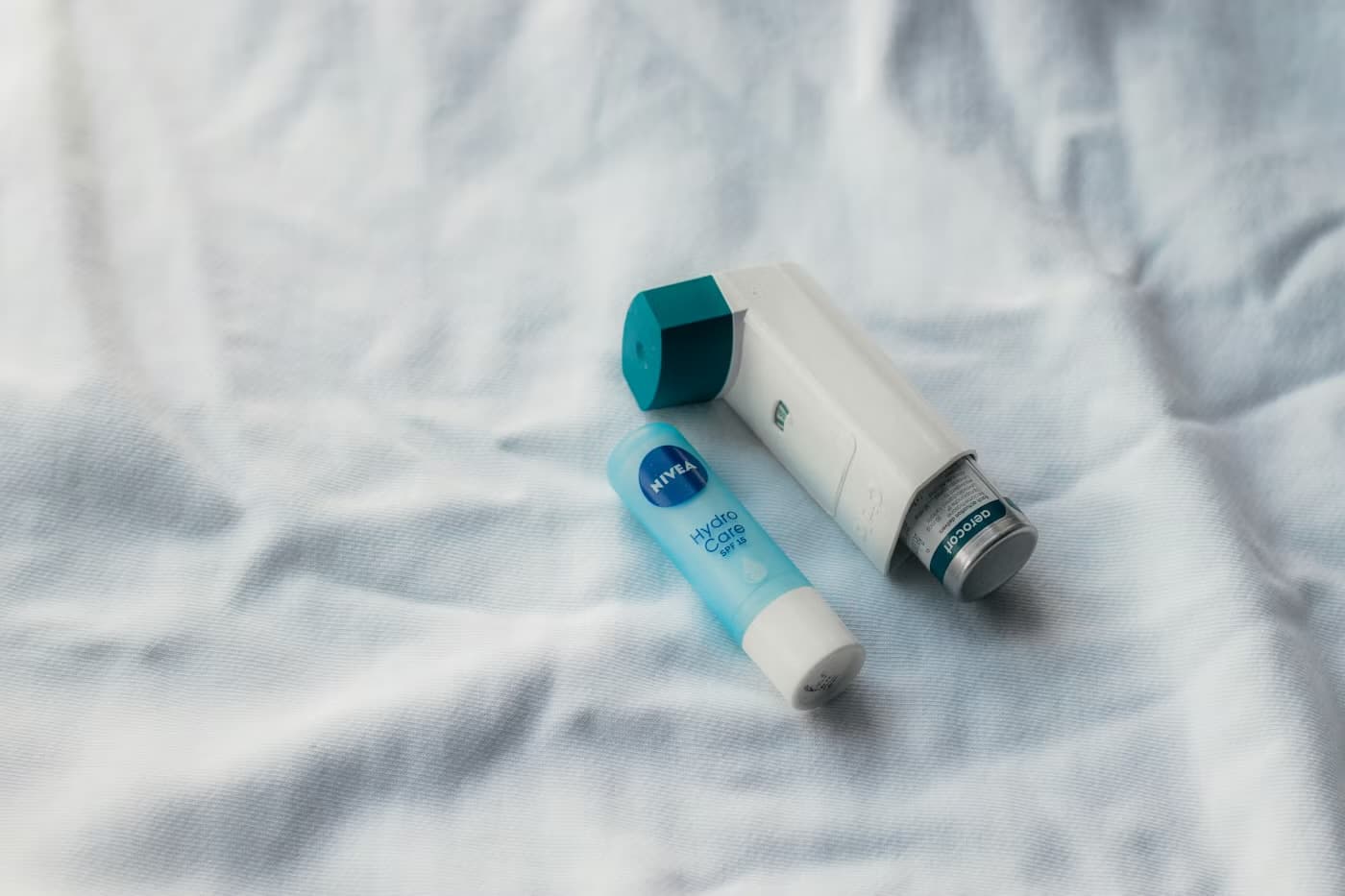
· Every Asthmatic must stop smoking immediately if they are smokers and avoid precipitants
· Each Asthmatic will be given an inhaler and your technique must be perfected.
· Asthmatics need to use a peak flow meter to monitor PEFR twice a day.
· Patients should educate themselves to manage their disease in response to changes in symptoms or PEFR.
· Asthmatics should know exactly
what to do in an emergency.
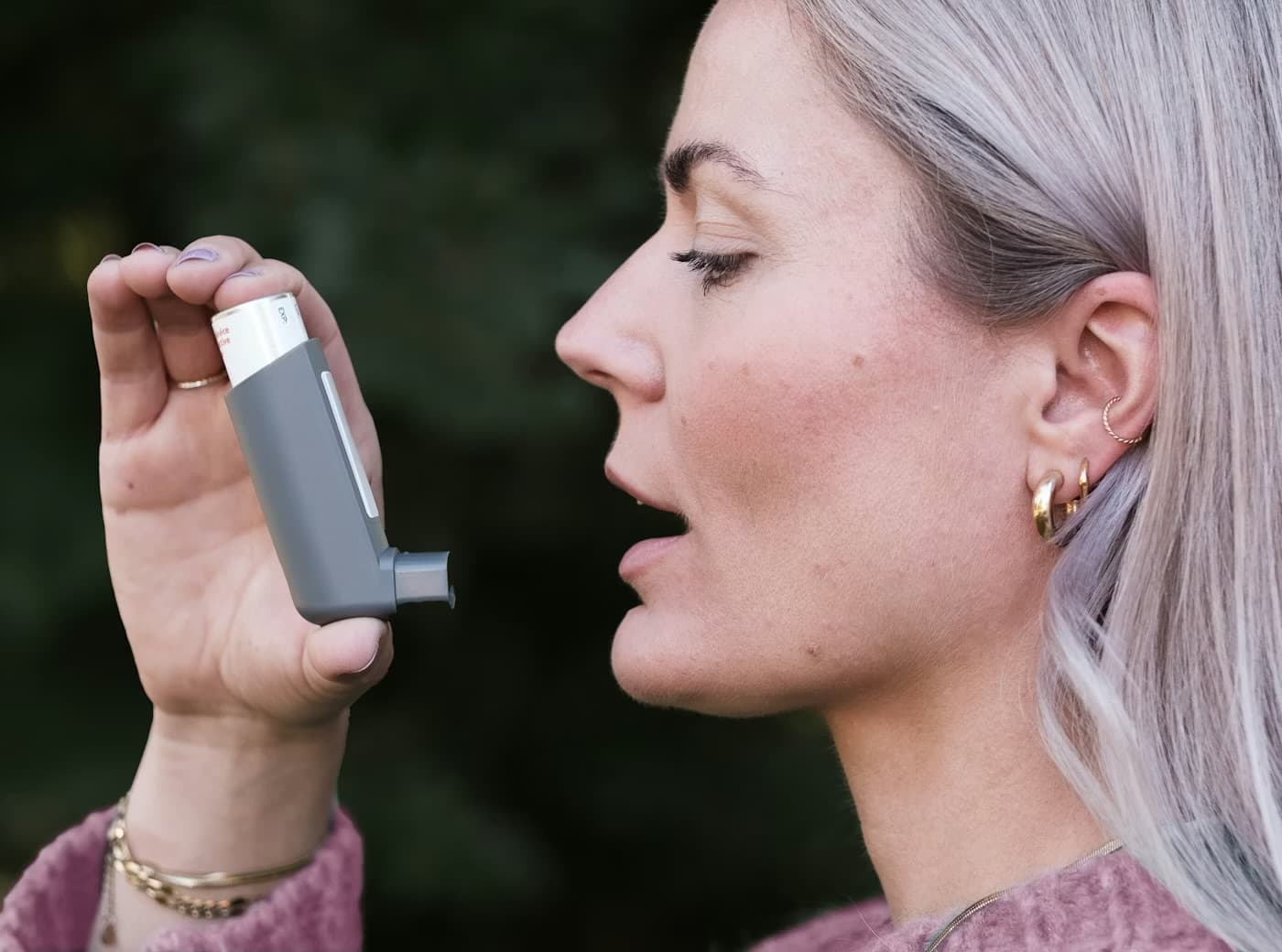
Asthmatics struggling to breath should be given Oxygen immediately.

A short explanation of how Asthmatics should be treated is as follows:
· The start of the treatment should start with a short-acting Beta2-agonist
· Depending of the outcome, a standard dose inhaled steroid should be added
· Step 3 is: increase the dose of the inhaled steroid
· A long-acting steroid should then be added
· A regular daily dose of prednisone should then be added
(Click here for the full explanation of Asthma treatment)
So, what does the medication really do?
· Beta2-adrenorecetpers agonists relaxes the bronchial smooth muscle, acting within minutes. Salbutamol is best given inhaled, but can also be given orally or intravenously. Salmeterol is a long-acting inhaled B2-agonist is a long-acting that an help nocturnal and reduce morning dips.
· Corticosteroids are best inhaled, example beclomethasone via a spacer (or powder) but may be given orally or intravenously. They act over days to decrease bronchial mucosal inflammation. Oral steroids are used acutely, taken orally, and make sure you rinse your mouth toughly afterwards to avoid oral candidiasis.
· Aminophylline may act by inhibiting phosphodiesterase, thus decreasing bronchoconstriction. This should be tried as prophylaxis, at night to prevent morning dipping. Stick with one brand name. It is also useful as an adjunct, if inhaled therapy is sub-optimal.
· Anticholinergics may decrease muscle spasm synergistically with B2-agonists. They may be of more benefit in COPD, than in Asthma.
· Cromoglycate: May be used as prophylaxis in mild and exercise-induced Asthma, especially in children
· Leukotriene receptor antagonists: blocks the effects of cysteinyl leukotrienes in the airways.
Once Asthma is confirmed, don’t leave home without your bronchodilator/steroid pump - you’ll never know when you might need it.

References
1. Longmore M, Wilkinson I, Török E. Oxford Handbook of Clinical Medicine. (2001). 5th Edition, Printed by Oxford University Press Inc.
2. Cox J K, Lockey R, Cardet J C. Cough-Variant Asthma: A Review of Clinical Characteristics, Diagnosis, and Pathophysiology, (2026). J Allergy Clin Immunol Pract. Nov 16;13(3):490.doi:10.1016/j.jaip.2024.11.006
Need guidance on this topic?
Book a virtual consultation and get personalised advice from a medical professional.
Book a Consultation